


Japan Cherry Blossom Season 2026 – Business Aviation Guide
For more information on Japan, visit our destination guides:
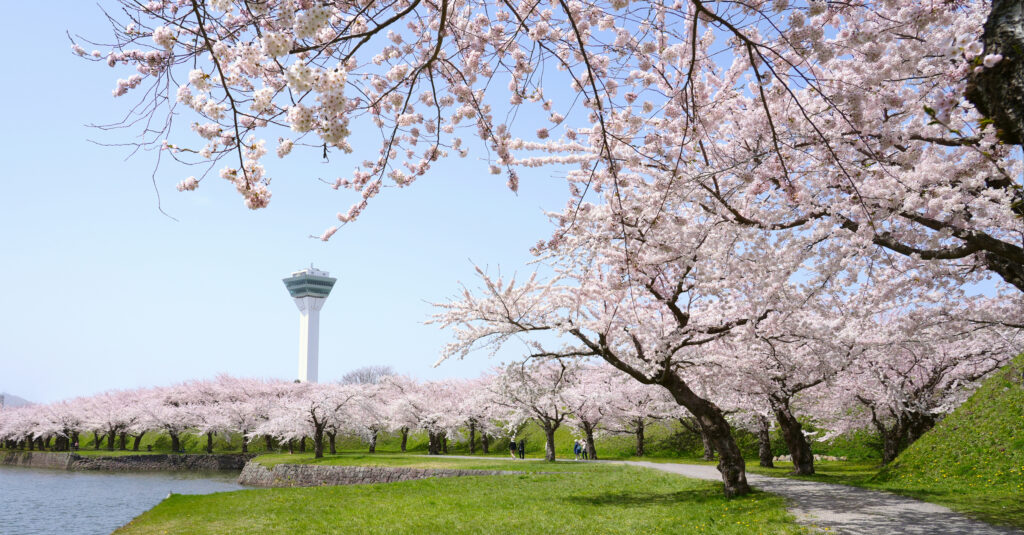
Japan’s cherry blossom season, known locally as sakura, is one of the busiest travel periods of the year for both business and general aviation. Each spring, tens of millions of domestic and international travelers move across the country, creating sustained pressure on airports, hotels, and ground services.
For operators, cherry blossom season is less about regulatory difficulty and more about timing risk. Demand concentrates quickly, forecast shifts drive late itinerary changes, and operational flexibility disappears faster than many expect.
2026 Cherry Blossom Forecast
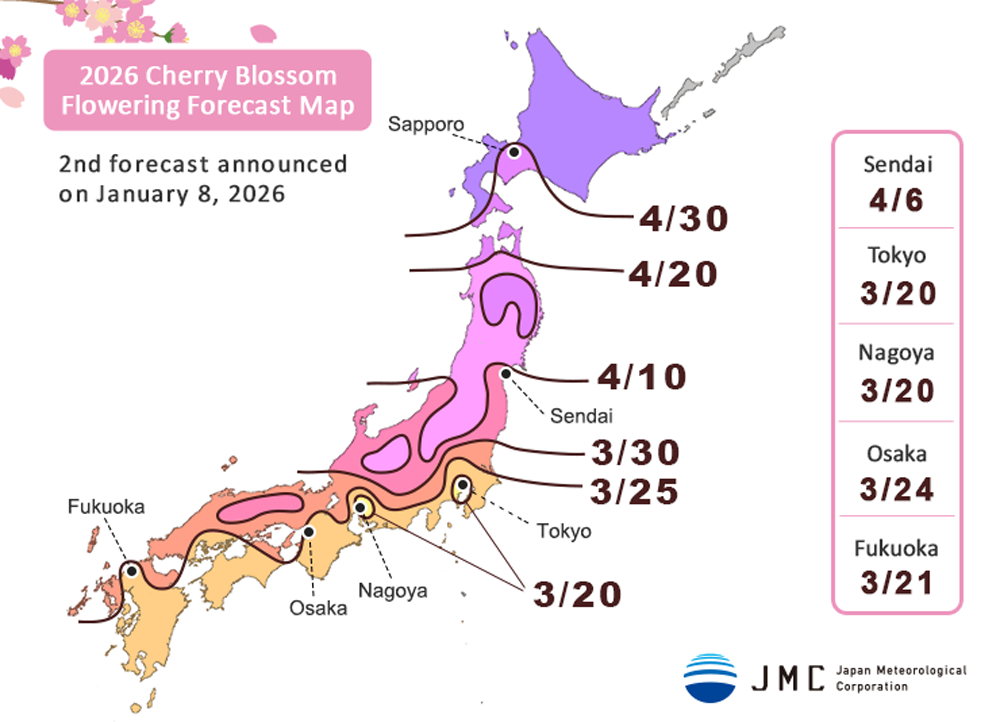
According to the second official 2026 Cherry Blossom Forecast issued January 8, 2026 by Japan Meteorological Corporation (JMC), blossoms are expected to bloom earlier than average across much of central and eastern Japan.
The forecast covers approximately 1,000 observation locations nationwide and includes both flowering (kaika) and full bloom (mankai) estimates for Somei Yoshino cherry trees. The next update is scheduled for January 22, 2026.
Key Forecasted Dates (Major Cities)
- Tokyo
- Flowering: March 20 (≈4 days earlier than average)
- Full bloom: March 27
- Nagoya
- Flowering: March 20
- Full bloom: March 29
- Osaka
- Flowering: March 24
- Full bloom: March 31
- Kyoto
- Flowering: March 25
- Full bloom: April 1
- Hiroshima
- Flowering: March 21
- Full bloom: March 30
- Fukuoka
- Flowering: March 21
- Full bloom: March 30
- Sendai
- Flowering: April 6
- Full bloom: April 11
- Sapporo
- Flowering: April 27
- Full bloom: May 1
Overall, the 2026 season is expected to follow the typical south-to-north progression, with peak timing in central Japan occurring slightly earlier than long-term averages.
Forecast reliability and planning impact
Cherry blossom forecasts are based on historical data and current weather conditions, but blooming remains dependent on nature. Even when forecasts are issued, there is no guarantee they will hold.
In 2025, peak bloom timing shifted by more than ten days in some regions, driving late schedule changes, hotel rebookings, and ground transport challenges.
Operators should treat bloom forecasts as guidance, not fixed schedules, and plan with flexibility built in.
Critical 2026 schedule change consideration (late March)
One additional factor operators must account for in 2026 is the transition to the IATA Summer 2026 (S26) schedule, which begins March 29, 2026.
This seasonal change historically results in delays in slot confirmation at major Japanese airports from late March through early April. Outside of slots secured through monthly slot applications, confirmations during this period are often delayed or issued very close to the operation date.
Operational impact
-
Slower slot confirmations for late-March and early-April operations
-
Reduced flexibility during the schedule transition
-
Higher risk for operators relying on ad-hoc slot coordination
Operators planning travel between March 24 and early April should factor this into scheduling assumptions.
Cherry Blossom Operations Risk Box – Where Trips Tighten
Cherry blossom season disruptions are rarely caused by a single constraint. They typically result from stacked timing risks.
- Forecast shifts trigger late itinerary changes, compressing planning windows
- The IATA S26 schedule transition slows slot confirmations for late-March operations
- Permit revisions (tail swaps, AOC changes) introduce additional approval delays
- Hotels and ground transport availability disappear even when aircraft access is secured
Operational takeaway: Cherry blossom trips fail not because of restrictions, but because multiple timing pressures converge at once.
Business Aviation Implications for 2026
Based on current forecasts, historical traffic patterns, and the IATA schedule transition, the highest congestion risk is expected between March 24 and April 5, with pressure extending beyond those dates as forecasts shift.
During this period, operators should expect:
-
Slot constraints at major airports
-
Delays in slot confirmation
-
Limited parking availability under standard airport limits
-
Elevated hotel demand
-
Reduced tolerance for late changes
While no event-specific parking restrictions are planned, standard airport parking limits remain in force and are strictly applied.
What experienced operators do differently
Experienced operators plan cherry blossom trips around windows, not dates. Rather than anchoring to a single bloom forecast, they preserve flexibility by finalizing aircraft and permit details early, avoiding late-March schedule compression where possible, and building alternate plans before peak demand sets in. This approach reduces exposure when forecasts shift or airport capacity tightens late in the planning cycle.
Slots, parking, and operational reality
Cherry blossom season does not trigger special NOTAMs or event-specific operational restrictions.
Key points:
-
No additional NOTAMs are issued for cherry blossom season
-
No high-demand seasonal charges apply
-
Parking limits follow standard airport rules
-
Quick turnarounds may be possible, subject to confirmed slot availability
-
Monthly slot applications remain the most reliable planning method
Permit sensitivity during peak season
For charter operations, permit flexibility is reduced during peak cherry blossom season.
-
Tail swaps, AOC changes, or aircraft substitutions typically require reapplication
-
Reapplications can add several days to approval timelines
-
Late changes should be avoided once permits are issued
Tokyo Area Airport Guidance
Most cherry blossom travelers plan to visit Tokyo or Kyoto. Airport choice matters.
- Haneda (RJTT): Slots and parking are extremely constrained during cherry blossom season. Extended stays are difficult, and flexibility is minimal during peak days.
- Operational guidance: RJTT should not be relied upon unless slots and parking are firmly confirmed well in advance.
- Narita (RJAA): RJAA is the preferred airport for Tokyo-area cherry blossom travel, offering more consistent slot availability and parking flexibility.
Kyoto and Kansai region guidance
Kansai International Airport (RJBB)
Parking is typically limited to approximately 72 hours during peak cherry blossom periods.
Alternatives include:
-
Chubu (RJGG) with longer ground transport
-
Aircraft repositioning after passenger drop-off
-
Kobe Airport, noting CIQ requires advance notice and operations are limited
Airports to Avoid for Cherry Blossom Planning
The following airports are not realistic options for cherry blossom season GA operations:
-
Chofu (RJTF)
-
Osaka Itami (RJOO)
Regional Alternatives to Reduce Congestion Risk
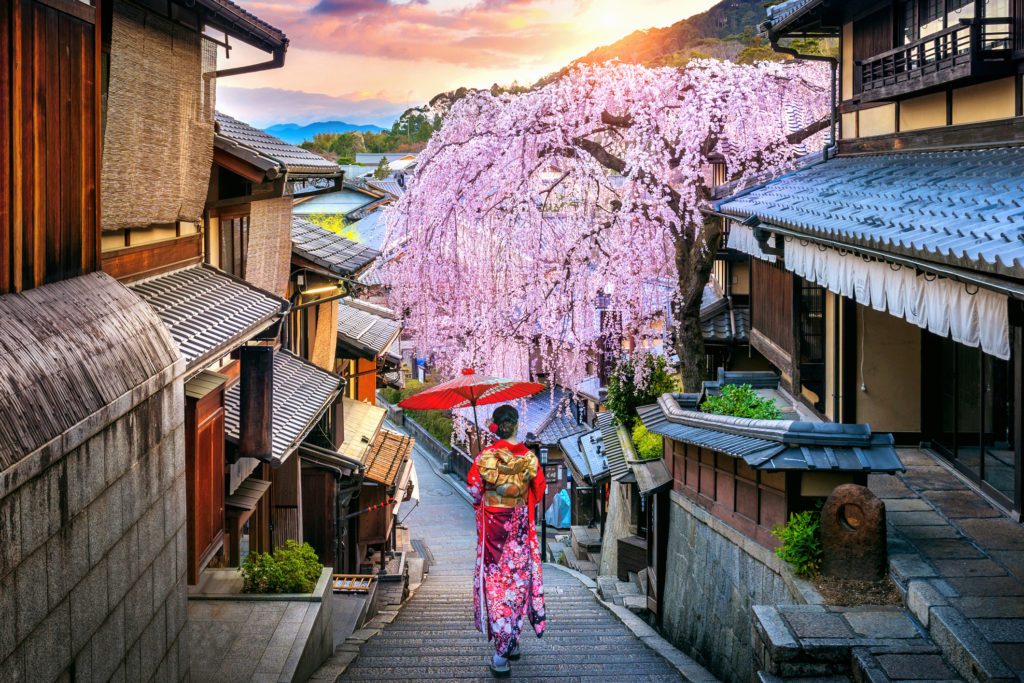
Northern Japan, particularly Hokkaido, typically peaks later (late April to early May) and often experiences lower congestion levels than central Japan.
Ground support and handling considerations
-
GSE availability varies by airport, date, and time
-
Service availability must be confirmed for each operation
-
Standard ops hours are typically 0900–1800 local, with extensions possible
Planning Recommendations

Operators planning Japan operations during cherry blossom season should:
-
Monitor official forecast updates closely
-
Account for the March 29 IATA S26 schedule change
-
Secure slots and parking early, prioritizing monthly applications
-
Avoid late aircraft or permit changes
-
Plan alternates and repositioning strategies in advance
-
Coordinate early with local trip support teams
Late changes affect not only aircraft operations, but also slots, permits, hotels, and ground transportation simultaneously.
Key Takeaways

-
Bloom timing can shift significantly
-
Peak congestion expected March 24–April 5
-
RJAA is preferred for Tokyo-area operations
-
RJBB parking limited to ~72 hours during peak
-
Northern Japan offers more flexibility
-
No special NOTAMs or seasonal charges apply
Final operational guidance
Cherry blossom season is operationally manageable with early planning and realistic assumptions. Operators who plan around forecast volatility, seasonal schedule transitions, and airport capacity limits are best positioned for success.
In practice, the earlier a cherry blossom trip is treated as peak season, the fewer options disappear later.
Universal Aviation Japan can support local planning, airport selection, and on-the-ground coordination throughout cherry blossom season.