


Japan: 2026 Business Aviation Destination Guide
For more information on Japan, visit our destination guides:
Japan operates on precision, and for business aviation, that precision determines whether a trip runs smoothly or unravels quickly.
This is not a country where slot times are suggestions or “we will figure it out on arrival” is an accepted strategy. If you are used to flexibility, Japan can feel rigid. If you are used to structure, it can feel refreshingly reliable.
Japan is extremely efficient, but it does not reward improvisation, says Hiroshi Higashiyama, Universal Aviation Japan. Once approvals are issued, the expectation is that the operation will be executed exactly as filed.
This guide outlines what operators need to know for successful operations into Japan, including airport access realities, slot discipline, permit procedures, CIQ coordination, documentation, and the operational precision that defines every trip.
Japan operations reality check
- Approved slot times function like operational law, not scheduling preferences
- Everything flows from approvals, including slots, parking, and CIQ coordination
- ATC and ground handling are world-class, with limited tolerance for change
- Handler coordination is essential and not optional
When a handler tells you a slot is the only one available, that is not a negotiation starting point, Higashiyama notes. That is the operational reality.
Tokyo area airports
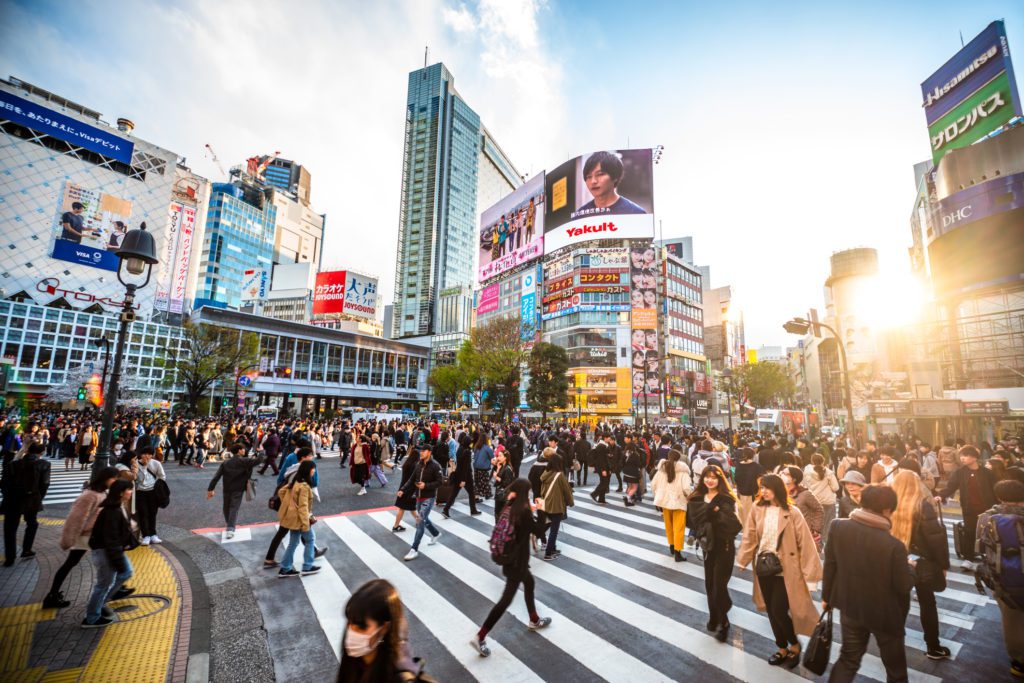
Tokyo remains the primary destination for international business aviation traffic into Japan and is served by two airports with very different operating characteristics. Choosing between them is less about preference and more about how much schedule flexibility the trip can realistically tolerate.
Haneda (RJTT): Premium Access, Premium Constraints
Haneda offers unmatched proximity to central Tokyo and operates 24 hours for business aviation. It is also the most operationally constrained airport environment in Japan.
“Haneda works best when expectations are aligned early,” says Higashiyama. “Once the plan is approved, there is very little room to adjust.”
Key operating realities at Haneda include:
-
Slot availability is severely limited, particularly for daytime operations
-
Parking requires separate approvals for landing, parking, and departure
-
Schedule flexibility is minimal once approvals are confirmed
-
Scheduled airline traffic always takes priority over business aviation
-
Parking is limited to five days total and is strictly enforced
-
Parking beyond five days is not possible
-
Operators requiring longer stays must reposition to Narita (RJAA) or Nagoya (RJGG)
-
Operational note for flight crews: Haneda routinely conducts simultaneous parallel approaches. Any overshoot or deviation on final is treated as a significant safety hazard.
During south wind operations, expect:
-
Simultaneous LDA approaches to Runway 22/23
-
Simultaneous RNAV or ILS approaches over central Tokyo to Runway 16L/16R during specified periods
Precision on final approach is critical in this environment.
Narita (RJAA): Reliable Alternative With Defined Boundaries
Narita provides a more forgiving operating environment for business aviation than Haneda, particularly for overnight and extended stays. While surface travel times to central Tokyo are longer, access, parking availability, and overall predictability are generally better.
Operational advantages include:
-
Significantly better parking availability than Haneda
-
More achievable slot access
-
Dedicated business aviation CIQ facilities for passengers and crew
-
Less congestion compared to Haneda
Critical operating limitation:
-
Curfew from 2300 to 0559 local time
Curfew clarification:
-
Aircraft may land or depart between 2300 and 2359 local time
-
This requires submission of a valid noise certificate through the ground handler in advance
-
After 2359 local time, operations are not permitted
-
The airport does not grant discretionary curfew extensions
The only exception occurs during rare operational disruptions, such as heavy snowfall, when the airport may temporarily apply a limited buffer to manage deicing congestion. Outside of these conditions, curfew enforcement is firm and not subject to negotiation.
Narita is often the practical choice when parking duration, operational stability, and schedule tolerance matter more than proximity to downtown Tokyo.
Regional airports
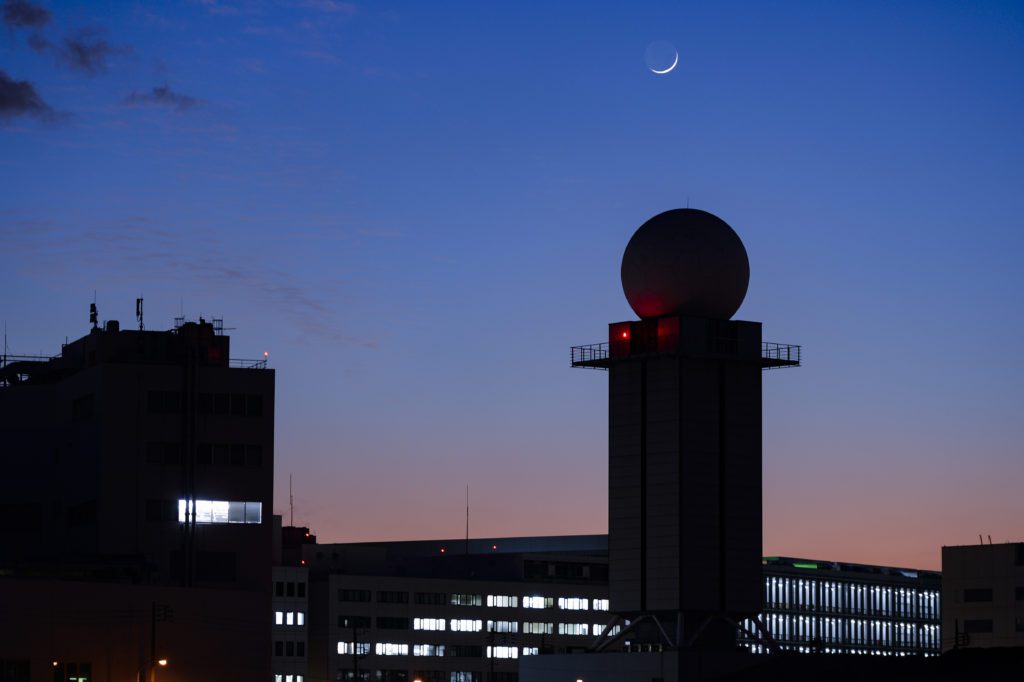
Outside Tokyo, Japan offers reliable business aviation infrastructure at airports that frequently serve as alternatives when Tokyo access becomes constrained.
- Sapporo (RJCC)
- Nagoya Chubu (RJGG)
- Osaka Kansai (RJBB)
- Fukuoka (RJFF)
If Tokyo becomes too restrictive, Nagoya often keeps the trip moving without drama, explains Higashiyama. Nagoya commonly functions as a pressure valve with workable slots, parking availability, efficient customs processing, and predictable ground operations. It is also frequently used for tech stops on long-range routings.
Airport slots are the foundation
Airport slots are the foundation of successful business aviation operations in Japan. The approved slot time drives ground handling coordination, CIQ scheduling, and flight planning parameters.
Once a slot is approved, everything else flows from it, Higashiyama explains. Changing times late almost always creates downstream issues.
- Slots are mandatory at all major airports
- Tokyo-area airports are the most constrained
- Changes often trigger re-approval of parking and CIQ
- Day-of flexibility should not be expected
- Earlier submissions improve access probability
Planning timeline guidance
Japan rewards early planning and penalizes late change. Requirements vary by airport and demand, but operators should expect flexibility to drop sharply as the operating date approaches.
- 30 or more days out: best window for Tokyo-area access during high-demand periods
- 14 days out: regional airports may still remain workable, depending on demand
- 72 hours out: slot times are largely fixed and changes may trigger re-approval
- Day of operation: enforcement rather than accommodation should be expected
Clear communication of these constraints helps manage passenger expectations and reduce operational risk.
Permits and documentation
Japan’s permit structure is straightforward but precise. Documentation errors or late corrections can disrupt approved operating plans.
Landing permits
- Private non-revenue operations do not require landing permits
- Charter operations require landing permits
- Typical lead time is approximately three business days
- Urgent business flights may be accommodated with shorter notice
- Domestic charter legs require separate applications
Required inbound clearance documents
You will typically need the following for inbound GA clearance:
- General Declaration
- Complete passenger manifest
- Immigration embarkation and disembarkation cards
- Customs declaration form
Immigration and customs cards may be prepared by the handler in advance, except for signatures.
APIS and passport, visa rules
APIS data should be provided to the handler in advance to avoid clearance delays. The handler submits APIS prior to aircraft arrival. Provide all names, nationalities, gender, date of birth, and passport numbers.
- Passenger passports must be valid for the full length of stay in Japan
- Passenger visas, when required, cannot be obtained on arrival
- Crew do not require visas regardless of nationality
Crew members listed on the General Declaration are issued shore passes upon presentation of passport and crew ID.
Cabotage considerations
Cabotage rules prohibit charter operators from conducting domestic-only flights carrying Japanese nationals. Domestic segments are permitted only when passengers arrived internationally on the same aircraft or will depart internationally on the same aircraft. Passenger details for domestic segments should be clearly documented in the charter agreement.
CIQ customs, immigration, and quarantine
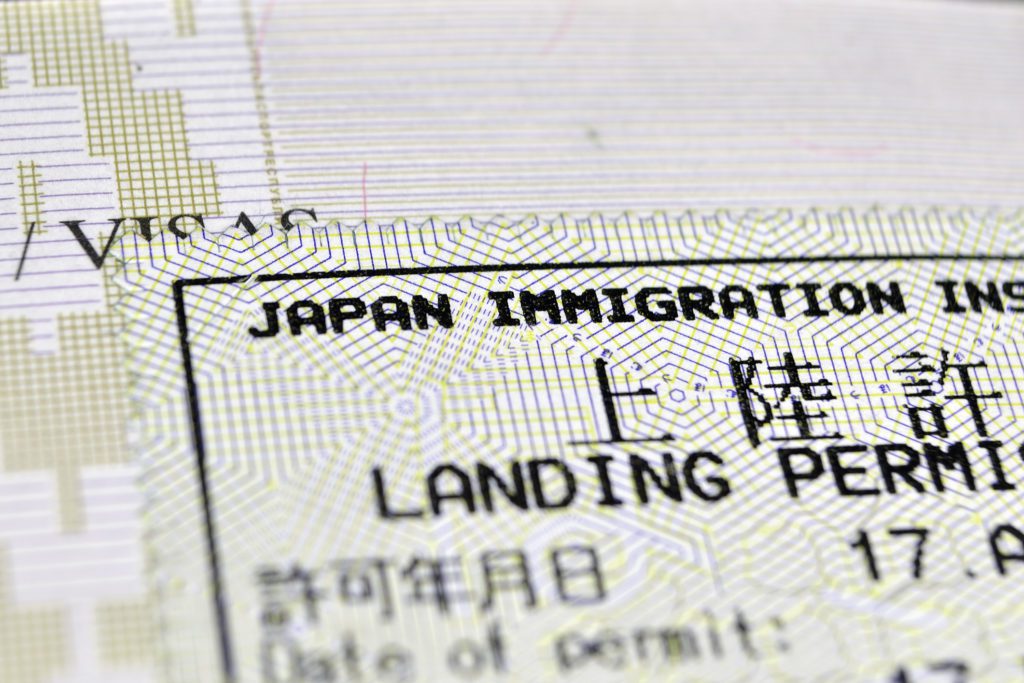
CIQ processing in Japan is efficient and professional, but procedures vary by airport and time of day. Most clearances occur in the main terminal, though GAT clearance may be available at select locations with advance arrangement.
CIQ availability
24-hour availability:
- Tokyo Haneda (RJTT)
- Nagoya Chubu (RJGG)
- Osaka Kansai (RJBB)
24-hour availability with prior coordination:
- Sapporo (RJCC)
- Okinawa Naha (ROAH)
- Kitakyushu (RJFR)
Crew should confirm clearance type on arrival, advises Higashiyama. The wrong shore pass can severely limit mobility.
Orange shore passes restrict crew movement to within 100 km of the entry airport and can significantly limit ground time options.
Online entry applications
Some airports accept online entry applications through Visit Japan Web. Operators should confirm applicability with the handler, since online submissions may not be accepted at GAT locations.
https://vjw-lp.digital.go.jp/en/
Agricultural and catering restrictions
It is generally prohibited to bring catering leftovers or many food items into Japan. Limited flexibility may exist, but any exceptions must be coordinated in advance. If you want to offload catering and store it at the airport for the next leg, confirm feasibility with your handler before arrival.
Pets and animal quarantine
Domestic pets may be temporarily imported to Japan only at certain airports and only with advance coordination. Common entry airports include Sapporo (RJCC), Narita (RJAA), Haneda (RJTT), Nagoya (RJGG), and Osaka (RJBB). Other airports may be possible but must be confirmed in advance.
Typical documentation requirements include:
- Application for import inspection
- Power of attorney if using a customs broker
- Rabies antibody test results
- Government-issued health certificates from the exporting country
- Any additional documents required by the Animal Quarantine Service
If requirements are not met, the animal may be quarantined for up to 180 days.
Weapons
Bringing firearms into Japan is prohibited. Any onboard guns or weapons must be notified to police and customs prior to arrival. Weapons may not be removed from the aircraft while in Japan. Police and customs will inspect weapons on arrival and seal the storage location. The seal is inspected and removed prior to departure. If the seal is tampered with or any discrepancies are found, departure may be held.
Operational considerations
Flight planning and ATC
Flight planning is generally aligned with ICAO standards, but airports apply local procedures and restrictions. Review requirements with your flight planning provider and ground handler prior to day of operation.
- File EOBT and ETA in accordance with approved slot times
- Avoid AFTN addressing errors for ICAO flight plans
- If actual ETA or EOBT will differ by more than 30 minutes from the approved slot, notify authorities well in advance via the handler
Some controllers may have difficulty communicating non-routine items in English. Speak slowly and clearly.
Departure procedures and TSAT
File flight plans at least two hours prior to EOBT and contact ATC early, typically 20 to 30 minutes before EOBT, to confirm the plan is ready.
At Haneda, TSAT procedures apply. For GA, TSAT equals EOBT. Engine start prior to TSAT is restricted and aircraft may be instructed to wait. Delays of up to 30 minutes after TSAT are generally manageable.
Enroute requirements
Japanese airspace is structured around RNAV and RNP. Non-equipped aircraft may require longer routings. TCAS and RVSM are mandatory. ADS-B is not currently mandated in Japan.
Fueling and ground operations
Fuel availability is reliable. Refueling with passengers onboard is prohibited and is now standard practice at Japanese airports. Ground handling standards are consistently excellent and crews should expect strict adherence to local procedures and handler instructions.
Seasonal pressure points
 Certain periods create sustained demand pressure across Japan. During these windows, operators should expect reduced availability and increased coordination requirements.
- New Year holidays, late December through early January
- Golden Week, late April through early May
- Cherry blossom season, late March through early April
- Summer holidays, August
- Autumn travel season, October through November
- Winter ski season in Hokkaido
Hotels and crew accommodations

Hotels in Japan can sell out quickly during peak travel periods. In Tokyo and Osaka, 4-star crew accommodations often run around USD 250 per night and availability can tighten. In regional locations, inventory may be limited to smaller properties and availability near the airport can be constrained.
During peak periods, ground handlers may need to source accommodations well outside city centers, sometimes requiring lengthy transfers. Some crews may consider capsule-style lodging depending on policy and comfort level.
Weather considerations

Typhoon season generally runs June through July in southern Japan and September through October in northern Japan. Major typhoon events can shut down airport operations for up to a full day.
Fog can be an issue at Narita, especially in the morning, and may occasionally close runways for an hour or two. Thunderstorms and heavy rain also disrupt operations at times.
Cost and security considerations
Japan is a higher-cost operating environment, but charges are generally predictable. Typical costs include parking, CIQ charges, potential overtime, and ground handling services.
At Haneda, VIP CIQ clearance for passengers can run about USD 2,200 per use, or about USD 4,400 total for one arrival and departure. This typically covers passengers only, since crew generally clear via the main terminal.
Airport security standards are excellent. Aircraft guards are typically unnecessary at major airports but may be arranged if required. Guards are unarmed.
Why local coordination matters
Japan works extremely well when the plan is respected, says Higashiyama. Problems usually arise when expectations and approvals drift apart.
Success depends on accurate documentation, slot discipline, adherence to approved schedules, and coordinated CIQ planning. Local oversight helps mitigate risk when demand surges or approvals change.
Japan’s precision-based system is not complex. It is exact. Operators who respect this framework consistently experience smooth, efficient operations. Those who attempt to improvise discover that Japanese efficiency includes efficient enforcement.
Universal Aviation Japan support
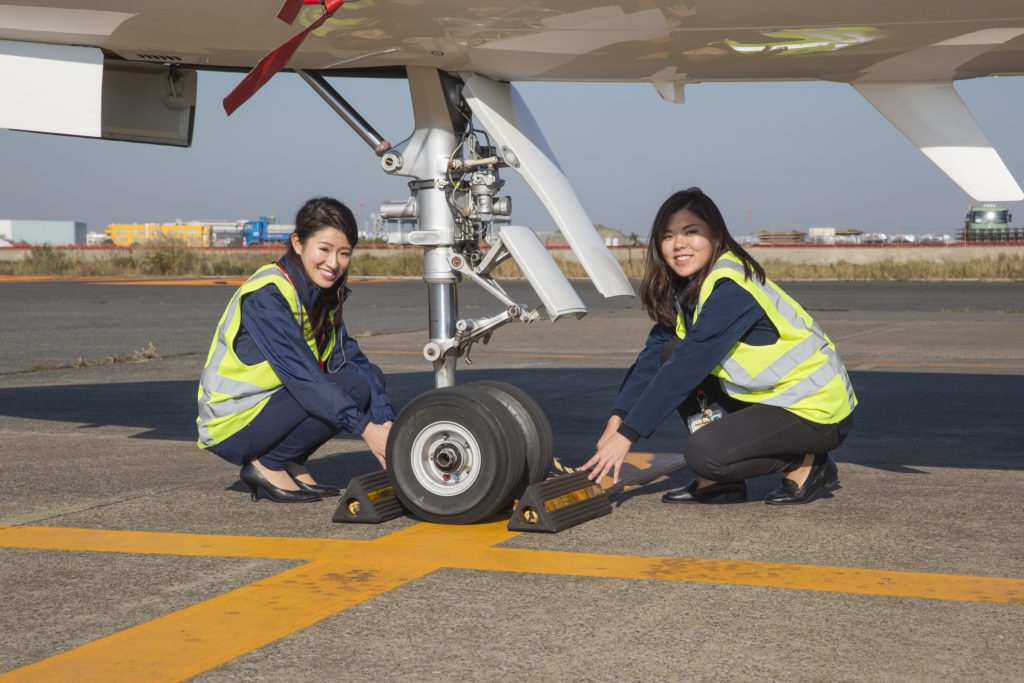 Universal Aviation Japan provides on-airport supervision and trip support at major destinations including Tokyo Haneda (RJTT), Narita (RJAA), Osaka Kansai (RJBB), Nagoya Chubu (RJGG), and Sapporo (RJCC).